
When someone searches for a service “near me” or looks for a business in their city, Google tries to show the most relevant local options.
That is where Local SEO comes in.
Local SEO is the process of improving a business’s visibility for searches connected to a particular location. It helps businesses appear when potential customers search on Google Search, Google Maps, and other location-based results.
For a local business, ranking for the right searches can mean more website visitors, phone calls, enquiries, directions, appointments, and customers.
In this guide, we will explain what Local SEO is, how it works, and what small businesses can do to improve their local visibility.
What Is Local SEO?
Local SEO, or local search engine optimization, is a strategy designed to help businesses become more visible to people searching for products or services in a specific geographic area.
For example, someone might search:
- plumber near me
- dentist in Nashville
- local SEO company
- roofing company near me
- best restaurant in downtown
- electrician in my area
Google may respond with regular organic search results as well as local results connected to Google Maps and Google Business Profiles. Local SEO focuses on helping a business appear more prominently for these location-based searches.
Why Is Local SEO Important?
Many customers search online before contacting a local business. If your company does not appear when those searches happen, potential customers may choose a competitor instead.
A strong Local SEO strategy can help a business:
- Increase visibility in local search results
- Reach people searching for relevant services
- Generate more website visits
- Receive more calls and enquiries
- Increase Google Maps visibility
- Build local brand awareness
- Improve trust through reviews and accurate business information
- Attract customers with stronger purchase intent
Local SEO is especially valuable because the person searching is often already looking for a solution. Someone searching for “emergency plumber near me,” for example, is usually much closer to hiring a business than someone casually reading a general plumbing article.
How Does Local SEO Work?
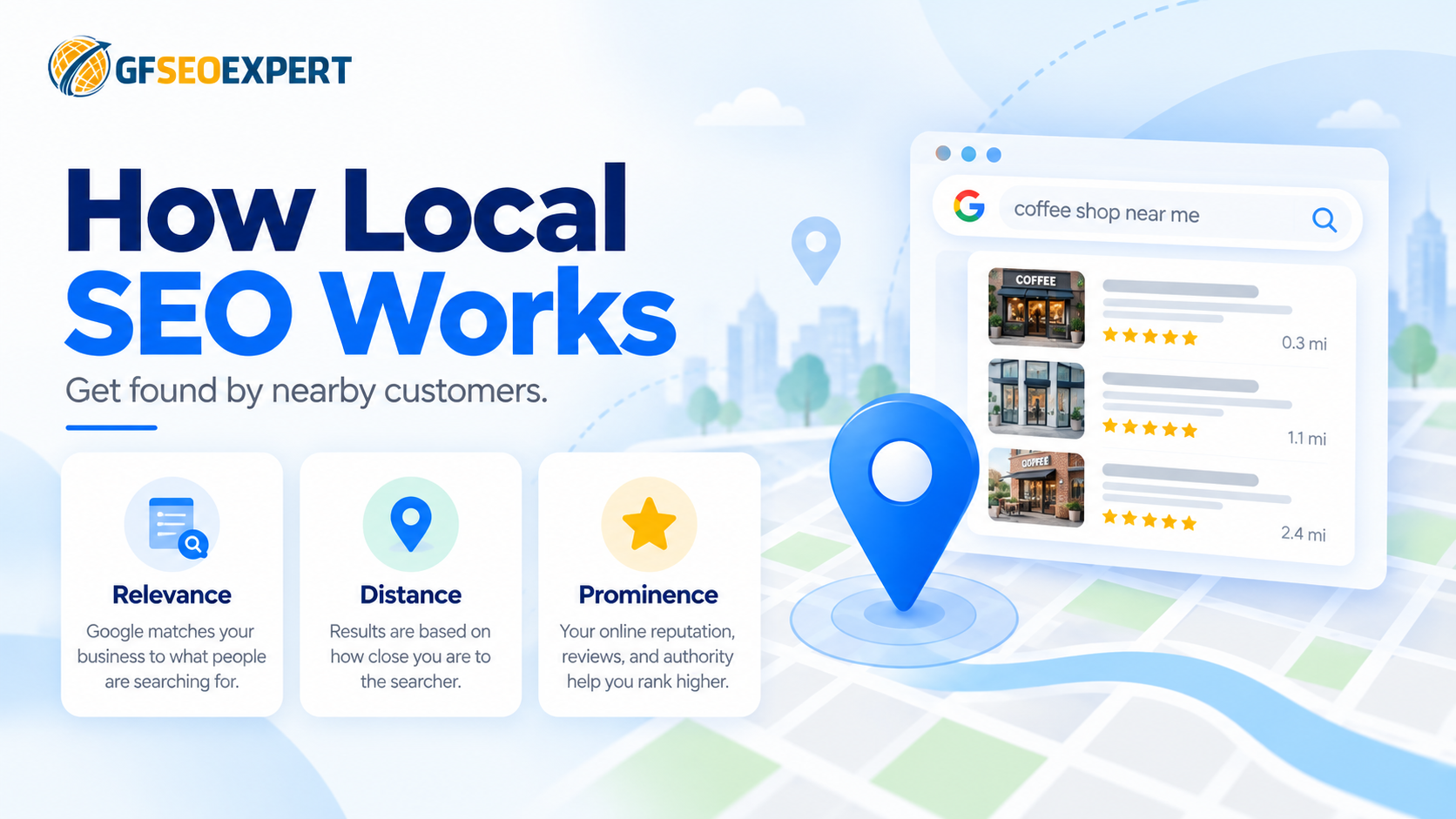
Google uses several signals to determine which businesses appear in local search results. Three core concepts are relevance, distance, and prominence.
Relevance
Relevance refers to how closely a business matches what the searcher is looking for. If someone searches for a local dentist, Google wants to understand whether a particular business actually provides dental services. Complete and accurate business information makes that match easier to understand.
Distance
Distance considers how far a business is from the location associated with the search. For many local searches, businesses closer to the searcher may have an advantage, but distance is only one factor. A nearby business will not automatically outrank every competitor.
Prominence
Prominence relates to how well-known and established a business appears. Reviews, brand mentions, links, and overall reputation can all contribute to how visible a business is locally. Local SEO therefore involves strengthening multiple signals across the website and the wider online presence.
What Are the Main Parts of Local SEO?
A complete Local SEO campaign usually combines profile optimization, keyword research, website SEO, business information consistency, reputation signals, authority building, and measurement.
1. Google Business Profile Optimization
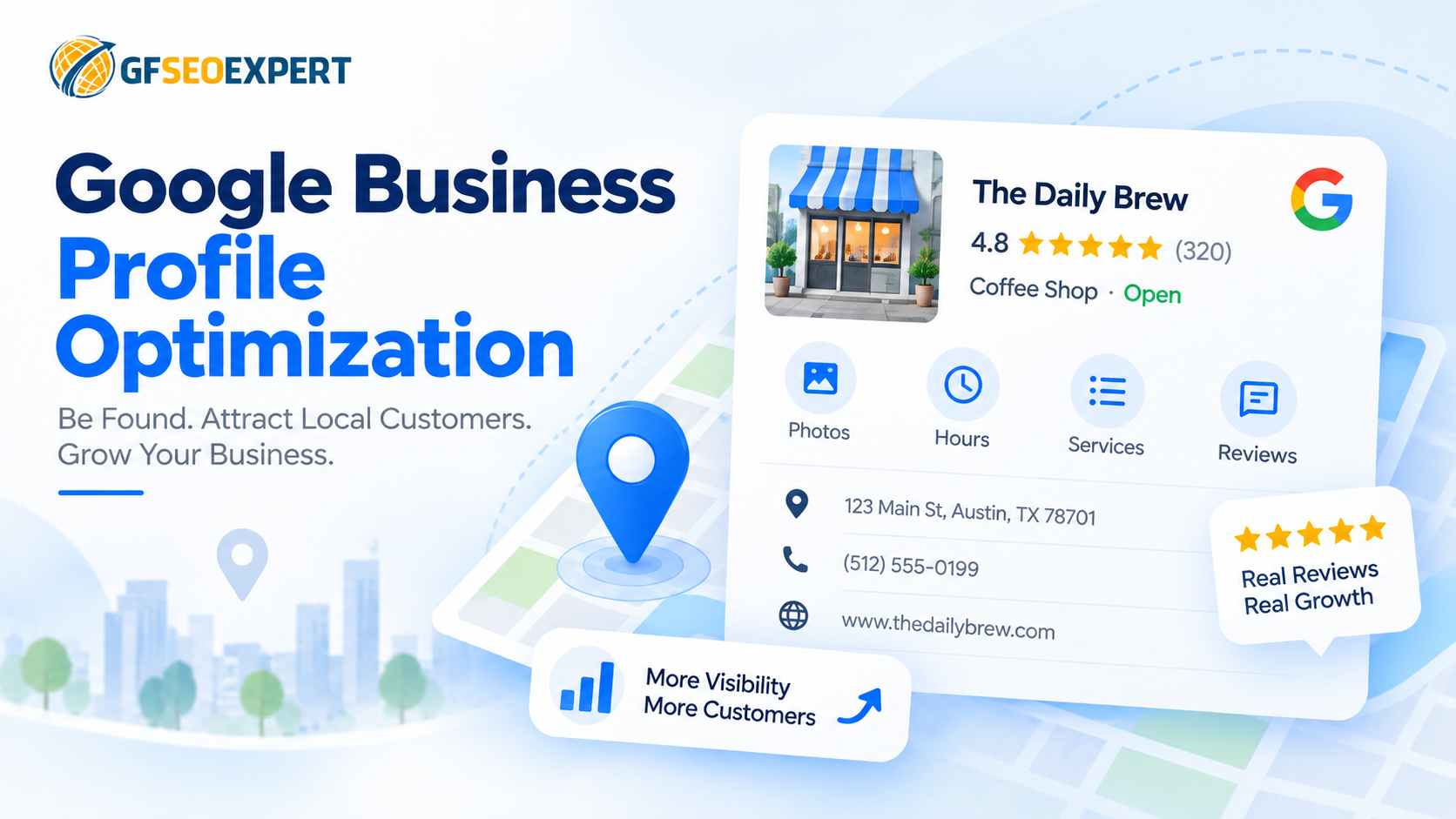
A Google Business Profile can be one of the most important assets for an eligible local business. Businesses should make sure their profile contains accurate and useful information such as:
- Business name
- Primary and secondary categories
- Address or service area
- Phone number
- Website
- Opening hours
- Services
- Business description
- Photos
- Other relevant profile information
The goal is simple: make it easy for customers and search engines to understand who you are, what you offer, and where you operate. Business Profile eligibility also matters, so the profile should reflect a genuine, eligible business setup.
2. Local Keyword Research
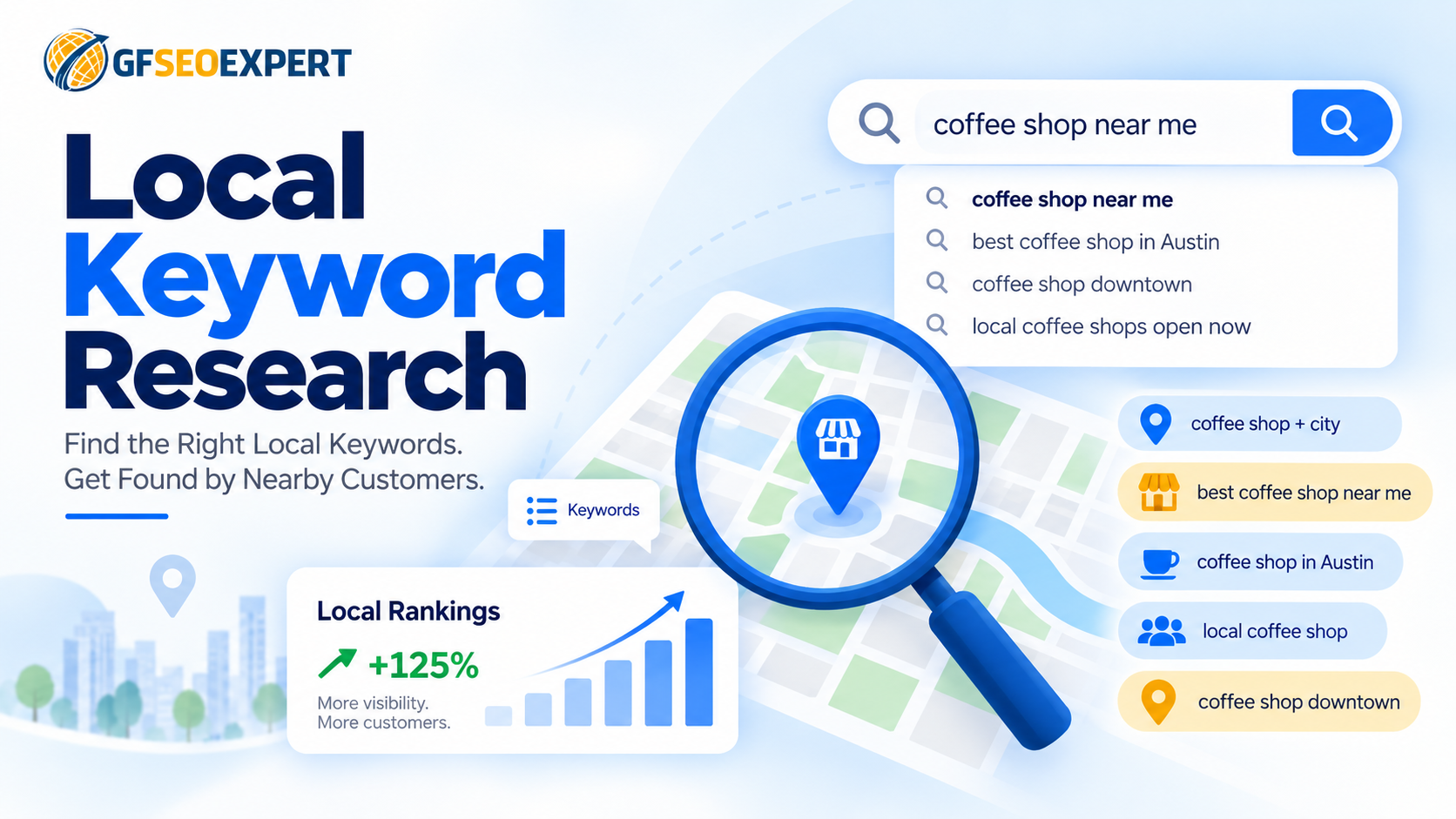
Local keyword research identifies the terms potential customers use when searching for your services. A plumber, for example, might target terms such as:
- plumber in Nashville
- emergency plumber Nashville
- drain cleaning Nashville
- water heater repair Nashville
- plumber near me
The objective is not to put the city name into every sentence. Instead, keyword research should help you understand customer demand and create pages that answer those searches naturally.
3. Local Service Pages
Every important service should usually have a useful, dedicated page. Instead of putting every service on one page, a business might create:
- /plumbing-services/
- /water-heater-repair/
- /drain-cleaning/
- /emergency-plumbing/
Each page should clearly explain the service, who it is for, what problems it solves, and how customers can contact the business. For businesses serving specific geographic markets, location relevance can be incorporated where appropriate.
Avoid producing dozens of nearly identical pages that only swap one city name for another. A useful location page should contain genuine information for that particular market.
4. On-Page SEO
Your website also needs strong traditional on-page SEO. Important elements include:
- Clear page titles
- One main H1 heading
- Logical H2 and H3 headings
- Helpful page content
- Descriptive URLs
- Internal links
- Image alt text
- Relevant title tags
- Meta descriptions
- Clear calls to action
A Local SEO service page should not simply repeat “Local SEO services” dozens of times. It should explain what is included, who the service helps, how the process works, and why a potential customer should contact you.
5. Business Information Consistency
Your important business details should be accurate wherever they appear online. This commonly includes your Name, Address, and Phone number – often referred to as NAP consistency.
Incorrect phone numbers, old addresses, duplicate listings, or inconsistent business names can create confusion for both customers and search platforms.
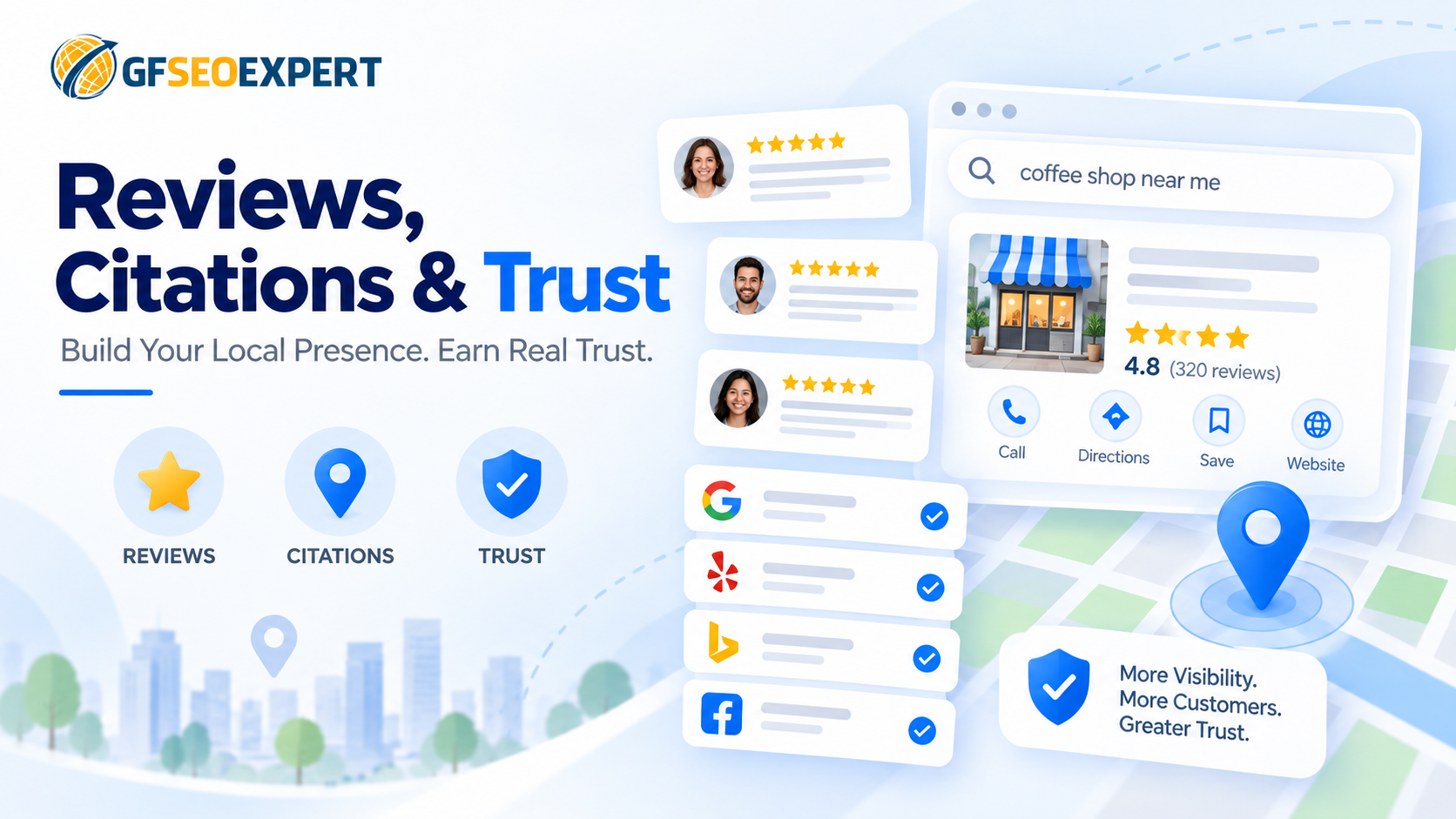
6. Local Citations
A local citation is an online mention or listing of a business. Depending on the business and country, these may appear on business directories, industry directories, local directories, chambers of commerce, professional associations, and other relevant local websites.
The objective should be relevant and legitimate business mentions, not submitting a company to hundreds of low-quality directories simply to increase a number.
7. Reviews and Trust
Reviews influence customer trust and can also support a stronger local presence. Businesses should develop a consistent and ethical process for asking genuine customers for feedback.
Do not purchase fake reviews or attempt to manipulate ratings. Responding professionally to both positive and negative feedback can show prospective customers that the business actively manages its reputation.
8. Local Link Building
Backlinks are another part of building online authority. For Local SEO, relevant links may come from:
- Local organizations
- Industry websites
- Suppliers
- Business partners
- Sponsorships
- Local publications
- Community organizations
- Useful editorial content
Quality and relevance matter more than collecting large numbers of unrelated links.
9. Local Content
A business website can publish useful content around questions customers actually ask. Examples include:
- How much does a service cost?
- How long does a service take?
- Common problems customers experience
- Local regulations or considerations
- Service comparisons
- Maintenance guides
- Buying guides
- Local case studies
Useful informational content can bring visitors into the website before they are ready to purchase. Those articles can then internally link to the relevant commercial service page.
10. Technical SEO
A website also needs to be technically accessible to search engines. Important areas include:
- Mobile usability
- HTTPS
- Page speed
- Crawlability
- Indexing
- XML sitemap
- Canonical tags
- Redirects
- Broken links
- Core Web Vitals
- Website architecture
A beautifully written local landing page will not perform as well as it could if search engines cannot properly crawl or index it.
Local Business Schema
Structured data can provide search engines with additional information about a business. Relevant LocalBusiness structured data may include the business name, address, telephone, opening hours, website, and business type.
Schema is not a replacement for good SEO, but it can help search engines better understand information on a page.
Local SEO vs Traditional SEO
Traditional SEO usually focuses on increasing organic visibility more broadly. Local SEO adds a geographic component.
Traditional SEO keyword: “SEO services”
Local SEO keyword: “SEO services in Nashville”
A local campaign may therefore involve both traditional website SEO and local signals such as Google Business Profile optimization, reviews, citations, and location relevance. The two strategies often work together.
Who Needs Local SEO?
Local SEO can be valuable for many businesses that serve customers in specific geographic areas, including:
- Dentists
- Doctors and clinics
- Lawyers
- Plumbers
- Electricians
- HVAC companies
- Roofing companies
- Restaurants
- Salons
- Auto repair businesses
- Real estate businesses
- Cleaning companies
- Contractors
- Local retail stores
- Other service-area businesses
If customers typically choose your business based partly on location, Local SEO may be an important acquisition channel.
How Long Does Local SEO Take?
There is no universal timeframe. Results can depend on factors such as:
- Competition
- Current website authority
- Existing rankings
- Business location
- Website quality
- Google Business Profile condition
- Review profile
- Backlink profile
- Previous SEO work
- Technical issues
- Content quality
Some improvements may appear relatively quickly, while competitive markets can take considerably longer. Be cautious of companies guaranteeing a specific ranking position by a specific date.
How to Start Improving Your Local SEO
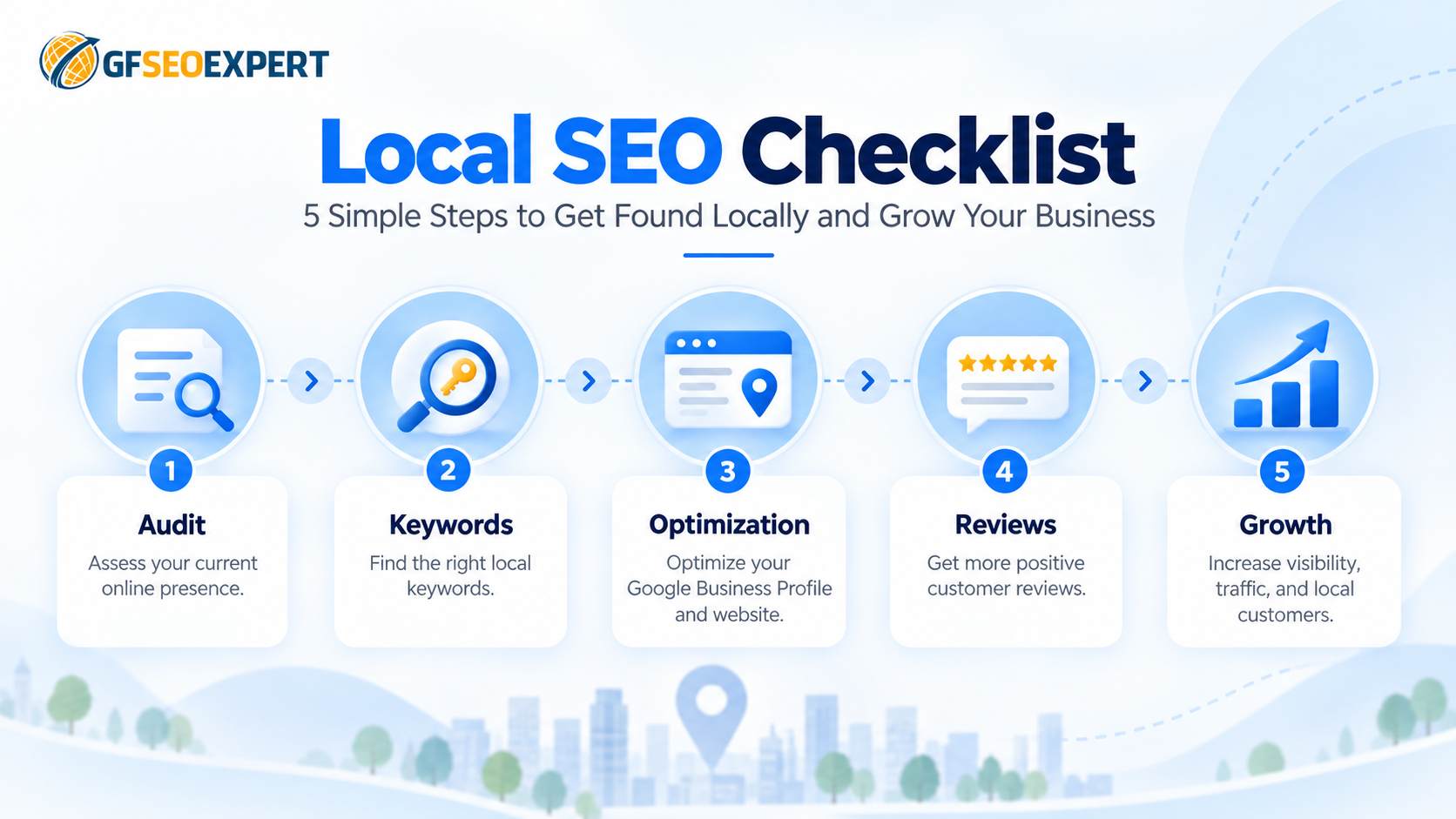
A practical starting process is to work through the following steps in order:
Step 1: Audit Your Current Visibility
Check your website, Google Business Profile, rankings, reviews, competitors, citations, backlinks, and technical SEO.
Step 2: Research Local Keywords
Identify how potential customers search for each important service.
Step 3: Optimize Your Main Service Pages
Make sure every important service has a useful page targeting the correct search intent.
Step 4: Improve Your Business Profile
Complete all relevant information and keep it accurate.
Step 5: Fix Technical Problems
Address indexing problems, broken pages, poor mobile usability, and other technical issues.
Step 6: Build Your Reputation
Generate genuine customer reviews and strengthen your brand presence.
Step 7: Build Relevant Authority
Earn useful mentions and backlinks from trustworthy, relevant websites.
Step 8: Publish Helpful Content
Answer real customer questions and internally link those articles to your services.
Step 9: Track Results
Monitor organic traffic, search impressions, rankings, profile activity, calls, form enquiries, bookings, and qualified leads.
Traffic alone should not be the final measurement. The real goal is generating qualified business opportunities.
Common Local SEO Mistakes
Avoid these common mistakes:
- Keyword stuffing
- Fake business locations
- Duplicate Google Business Profiles
- Buying fake reviews
- Publishing duplicate city pages
- Using incorrect business information
- Ignoring mobile users
- Creating thin service pages
- Building large numbers of irrelevant backlinks
- Focusing only on rankings instead of leads
- Neglecting website technical issues
Local SEO should make it easier for both search engines and customers to understand your business.
Frequently Asked Questions
Is Local SEO worth it for small businesses?
For businesses that depend on customers from specific locations, Local SEO can be an important marketing channel because it reaches people actively searching for relevant products or services nearby.
Can I do Local SEO myself?
Yes. Business owners can manage many fundamentals themselves, including updating business information, improving website pages, publishing useful content, and asking customers for genuine reviews. Competitive markets may require deeper technical SEO, content strategy, link building, and ongoing analysis.
Do I need a Google Business Profile for Local SEO?
A Google Business Profile can be very valuable for eligible businesses, particularly for Google Maps visibility. Businesses should ensure they meet the platform eligibility requirements and keep profile information accurate.
Are backlinks important for Local SEO?
Backlinks can contribute to the authority and prominence of a business online. The focus should be on earning relevant, trustworthy links rather than simply purchasing large quantities of links.
How often should I work on Local SEO?
Local SEO is usually an ongoing process. Business information changes, competitors improve, new reviews appear, search behavior evolves, and website content needs to stay accurate.
Grow Your Local Visibility With GF SEO EXPERT
Local SEO is not just about appearing higher on Google. The real objective is to connect your business with people who are already searching for the products or services you provide.
At GF SEO EXPERT, we provide Local SEO strategies designed around your website, market, competition, and business goals. Services can include:
- Local SEO audits
- Google Business Profile optimization
- Local keyword research
- On-page SEO
- Technical SEO
- Local citation work
- Content optimization
- Link building
- Competitor research
- Performance tracking
Compare our Local SEO Services or request a Free SEO Audit to find a useful starting point for your business.